• About
  • Books

Footsteps of the Artists

~ Follow the artists in France

Footsteps of the Artists

Category Archives: France Travel

Interview with Antoinette Foque

Monday, September 11, 2023

Posted by L. Peat O'Neil in Artists in Paris, Bookstores, Feminist Leaders, France Travel, Paris, Shopping in Paris, Women in Paris, Writers in France

≈ Leave a comment

Tags

Antoinette Foque, art, Art Galleries Paris, Editions des Femmes, Feminist publishers, Women's Bookstores

My interview with Antoinette Fouque (psychoanalyst, publisher and feminist activist) occurred thirty four years ago in November, 1989 at her office-residence on the rue du Bac, near Boulevard St. Germain. She was a leading modern feminist who launched women’s activism under the banner MLF  Movement de Liberation des Femmes in France. Madame Fouque also founded the first feminist publishing company in Europe, Éditions des Femmes.

She opened our conversation saying that it was an intensely interesting time in social psychoanalysis. “Tres indispensible,” she said, “for women to push for the rights of all women.”  We discussed the legal decision in France concerning a prohibition on wearing the veil associated with traditional Islamic clothing. “Whether it is racism or sexism, basically it is against women,” she said.

On the day I visited,  she had received word of winning a FNAC prize for publishing the work of Clarice Lispector with Virago. A very prestigious award.

Her publishing house is known by feminist publishers around the world. Shortly after Antoinette Fouque founded  Editions des Femmes in 1972,  other French publishers created product lines focused on women’s and feminist issues.  It was an era when new editorial positions with leadership positions were available to female editors.  By establishing Editions des Femmes, Madame Foque was part of a quiet and steady movement to expand options in publishing for women.  More than fifty later, in 2023, there are feminist and woman-focussed publishers in many countries.

Madame Fouque also started a books on tape collection during the 1980s, which at one time accounted  for one-third of Editions des Femmes business.  The recorded books featured readings done by major French actors.

Antoinette Fouque’s house is a pale grey and white symphony accented with copious displays of fresh flowers.  She wears grey slacks and a draped shirt with a topper in white silk.  Glasses evoke Sylvia Beach, the key 1900’s publisher of radically experimental literature.  A trio of excited lap dogs wreck havoc with the silence that otherwise bathes this house.  Her desk faces windows and flowers set in the wide sill.  Glass top bookcases behind.  Couch and chair in white leather.  The afternoon light goes dim as we speak.  She returns again and again to drive home her raison d’etre, the rights of women must be secured first.

“The first requirement is rights and liberties of women around the world.”

Kali, an Indian feminist press, is heavily influenced by government agenda, she notes. Éditions des Femmes remains independent. For the future, she sees an emphasis on the psychological collection, her personal project.

Earlier that day, I had visited the Librairie des Femmes store in Paris at 35 rue Jacob. The design esthetic was spare and bright, even back in 1989. White walls, indirect lighting, uncluttered bookshelves alternated with racks holding greeting cards and audio books.  One corner of the store was reserved for art exhibitions.

My quest was to interest her in helping me find a publisher for an English translation of the diary of  the 19th c. midwife and radical socialist, Suzanne Voilquin. The book details her years as a travelling midwife in Russia during the 1840s.  It was published in French by Edition des Femmes in 1976. But after talking to Antoinette Fouque, it seemed that this diary-memoir about dead feminists was less than crucial in contrast with the monumental political justice and economic equity gaps confronting women around the globe.

I try to show her that the midwife’s diary is relevant to women’s health and security in remote areas even today.  Voilquin was a trained midwife and worked in North Africa from 1834 to 1836 and in Russia during the 1840s. She reports on cholera, plagues and social conflicts. The plight of women with sick children and no financial support then is just as terrible now.

Mme. Fouque suggested inviting a feminist physician to write the introduction to the English version of Suzanne Voilquin’s memoirs. She mentioned Liza Alther, who lives in Vermont, who is connected to the Boston Women’s Health Collective

My tongue stumbling and balking like an overworked mule during the French conversation that touched complex subjects, there was little more to say.  I thanked her for the nearly an hour interview and felt out of step, wondering if my ideas came across. Wondering if my concerns were too harnessed to the past when there is so much to be done in the present.

Throughout her professional life, Antoinette Fouque was an activist focussed on the present politicized feminist era. I was interested in honoring forgotten feminist pioneers, by writing about the achievements of French socialists and feminists in the 1800s.

The Saint-Simonian socialist movement to which Suzanne Voilquin belonged, was active in France and other industrial areas of Europe from about 1830 to 1865. The Paris members had founded and produced women’s newspapers, created classrooms and schools for working-class girls, taught hygiene and pre-natal care to women in disadvantaged communities, and mobilized groups of members to provide medical aid across North Africa. They trained Egyptian and Berber women to be midwives. The principal male cadre of the organization traveled to the Holy Land to search for a female Messiah and planted themselves in Egypt to start the routing for the Suez Canal. Indeed, the midwife’s diary translation project was a look backwards.  I set it aside.  Antoinette Fouque died February 20, 2014.

Resources:

Espace des Femmes events – https://www.espace-des-femmes.fr/

Suzanne Voilquin’s image and book titles are included in her Wikipedia biography.

Mary Cassatt’s Chateau de Beaufresne

Tuesday, May 16, 2017

Posted by L. Peat O'Neil in American Artists in France, Artist's Studios, Artists in Paris, Artists Near Paris, Artists' Graves, France Travel

≈ Leave a comment

Tags

art history, Cassatt, Degas


ChBeaufresnePeatO'Neil

Chateau Beaufresne © L Peat O’Neil


Chateau de Beaufresne

Mary Cassatt lived at Chateau de Beaufresne in the town Le Mesnil-Theribus in the Oise, north east of Paris for the latter part of her life.

She first saw the Chateau in 1891 while the Cassatt family summered at Chateau Bachivillers a few kilometers away.

Cassatt learned that the 17th c. hunting lodge known as Chateau de Beaufresne was for sale and began inquiries.

During the summer of 1892, Mary again rented nearby Chateau Bachivillers while she painted the three enormous panels for the mural “Modern Woman” for the Chicago

ModernWomenMural

Mary Cassatt’s mural for the Chicago World’s Fair, 1893.

World’s Fair which opened May 1, 1893. The mural measured 58 feet by 12 feet and evidently was mishandled and lost after the Exposition closed October 30th.

The timeline for Mary Cassatt’s life at the National Gallery of Art website states she acquired Chateau de Beaufresne in 1894, but another source (McKown, Robin. The World of Mary Cassatt, Thos. Crowell Co. 1972, p. 140.) indicates she was already directing repairs and renovations at the Chateau de Beaufresne during the summer of 1892 while she was renting the nearby Chateau Bachivillers.

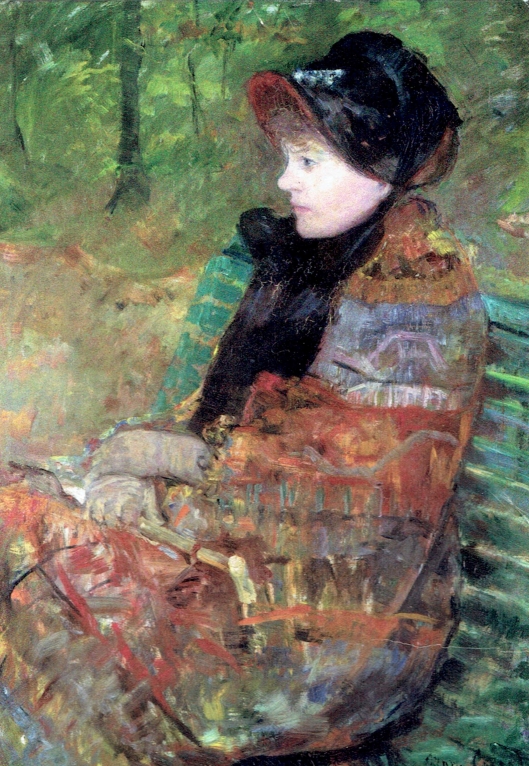
FranceSteps_Mlle Lydia Cassatt soeur de la'artiste ou l'Automne. 1880 Mary Cassatt (1844-1926)

Lydia Cassatt, sister of the artist Mary Cassatt.

Many artists and collectors visited Cassatt during the years she lived at her beloved country home. Among them, Mary’s devoted friend, the painter Edgar Degas often visited.

In 2002, I visited the Chateau to follow the footsteps of this beloved American painter.

ChatBeaufresneAandP

© L Peat O’Neil, 2002

The modest-sized chateau is set in swathe of lawns and woods with a stream cutting across the lower estate. The building is currently used as an agricultural education center.  When we arrived by car from nearby Gerberoy, students of the eco-institute were slamming a soccer ball around on the back lawn. A few were sitting on upper window sills, a perch with a hawk’s view of arriving visitors.

The rear chateau is open to the sunshine while the front is shadowed by tall trees.   Two towers rise on each side of the chateau’s façade, each topped with a cupola. External modern staircases are affixed to the towers, for exit in case of fire.

ChBeaufresneNotebookpage

Travel Journal page with sketch of Mary Cassatt’s tomb and layout of Chateau de Beaufresne estate. © L. Peat O’Neil, 2002

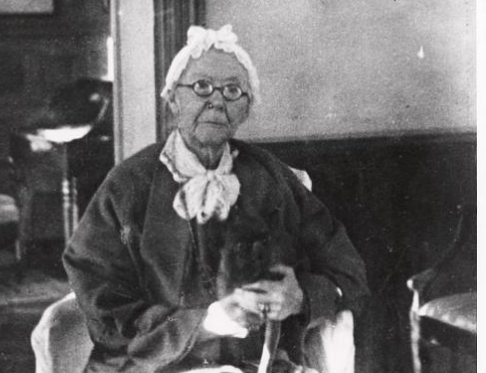
Mary Cassatt at Ch de Beaufresne, 1925

Mary Cassatt at Chateau Beaufresne, 1925. Image source: American Archives of Art https://www.aaa.si.edu


Mary died June 14, 1926. Her grave is in the village cemetery accessed by a footpath from the Chateau. A small patch of dark evergreen bushes shields the Cassatt family tomb.

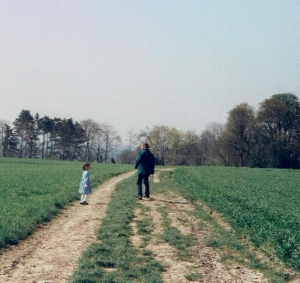
Beaufresne_Lane to CassatGrave

Country lane leading from Ch. Beaufresne to the Cassatt Family Tomb in the cemetery of Le Mesnil-Theribus, a village in the Oise district of France.

The grave tablets are plain granite which time has covered with lichen.  On the stones are carved the names Mary, Lydia, Mother, Father, Robert.


Resources:

Mary Cassatt Website

NYPL program on Cassatt and the 1893 World Exposition in Chicago.

McKown, Robin. The World of Mary Cassatt, Thos. Crowell Co. 1972

American Archives of Art -photo of Mary Cassatt at Chateau Beaufresne

Bibliotheque INHA

Claude Debussy :: Artist of Music

Friday, February 7, 2014

Posted by L. Peat O'Neil in Artists Near Paris, France Travel, Hotels in Paris, Musicians in Paris

≈ Leave a comment

Tags

Debussy, impressionists, museum, music

Archille-Claude Debussy was born August 22, 1862 in Saint-Germain-en-Laye.  Today, the small Debussy museum is established in the house where the composer came into the world.

Claude Debussy, ca. 1908. Photographer Felix Nadar. Photo courtesy Wikicommons.

Claude Debussy, ca. 1908. Photographer Felix Nadar. Photo courtesy Wikicommons.

Debussy’s compositions are known throughout the world.  His art endures as he is one of the most influential composers of the late 19th and early 20th centuries.  Along with Maurice Ravel, he was a notable figure in “Impressionist music”, though Debussy did not like the term applied to his own compositions. He was made Chevalier of the Legion of Honor in 1903.  Debussy’s  use of non-traditional scales and chromaticism influenced many composers who followed.  Debussy’s music is considered sensual and emotionally evocative. The Symbolist artists and writers inspired Debussy’s musical art and cultural foundation.

Claude Debussy’s father, Manuel-Achille Debussy, sold china and his mother, Victorine Manoury Debussy, was a seamstress. While Paris suffered the assaults of the Franco-Prussian War in 1870, Debussy’s pregnant mother evacuated to the south, to stay with her husband relatives in Cannes. Debussy began piano lessons there; relatives paid for the lessons.  By 1872, Debussy entered the Paris Conservatoire and progressed rapidly.  His trajectory to fame and recognition ensued.

Debussy’s personal life involved numerous alliances and some scandal.  In 1904 Debussy pursued an idyllic escape with his new lover Emma Bardac, who was married to a banker and the mother of one of his students.  They slipped away to the Isle of Jersey.  First to the town of Pourville near Dieppe, then to Jersey, staying at the Grand Hotel. Debussy’s wife Lilly Texier attempted suicide.  To avoid ensuing troubles while their respective divorces were being completed, Debussy and Bardac returned to Jersey and also stayed in London.

Their daughter was Debussy’s only child.  The family lived near the Bois de Boulogne, now 23 Square Avenue Foch in the 16th arrondissement of Paris.

Debussy died of longstanding cancer during the bombardment of Paris in the final year of World War I on March 25, 1918, just ten days after the Parisian prodigy composer Lili Boulanger,  who in 1913 at age 19 was the first woman to win the Prix de Rome for composition.  She was a student of Gabriel Faure and influenced by Debussy, who had himself won the Prix de Rome in 1884.

Claude Debussy, his wife and daughter are buried in Passy Cemetery near the Trocadero.

Exhibitions:

In 2012, Smith College Museum of Art in Northampton, Massachusetts offered the exhibition Debussy’s Paris: Art, Music and Sounds of the City. 

Also in 2012, the Musée d’Orsay in Paris produced the exhibition Debussy, Music and the Arts.

Sources:

https://en.wikipedia.org/wiki/Claude_Debussy

http://www.findagrave.com/cgi-bin/fg.cgi?page=gr&GRid=9680661

http://www.findagrave.com/cgi-bin/fg.cgi?page=pv&GRid=5478&PIpi=35747236

https://en.wikipedia.org/wiki/Lili_Boulanger

Information:  Musée Claude Debussy http://www.museums-of-paris.com/musee_en.php?code=513

The Artful Gardens of Andre LeNotre

Wednesday, January 22, 2014

Posted by L. Peat O'Neil in Artists Near Paris, France Travel, Gardens in France, Paris

≈ Leave a comment

Tags

chateau, design, gardens, history, Le Notre, walk in Paris

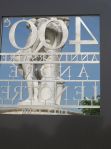
400th anniversary of Andre LeNotre

Tuileries decorative sign – 400th Anniversary of Andre LeNotre’s Birth

The Gardens of Andre Le Notre

Stroll along tree shaded paths, gaze at swans trolling the reflecting pools, watch the fountains play. There might be better ways to spend the day in France, but visiting public gardens is one of the most agreeable. And the elegant decorative creations of master landscape architect Andre Le Notre are the ultimate in classic French gardens. Many of Le Notre’s gardens are close to Paris, accessible by metro or RER. And generally, admission is free.  The 400th Anniversary of Andre LeNotre’s birth was celebrated throughout France in 2013.
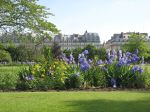
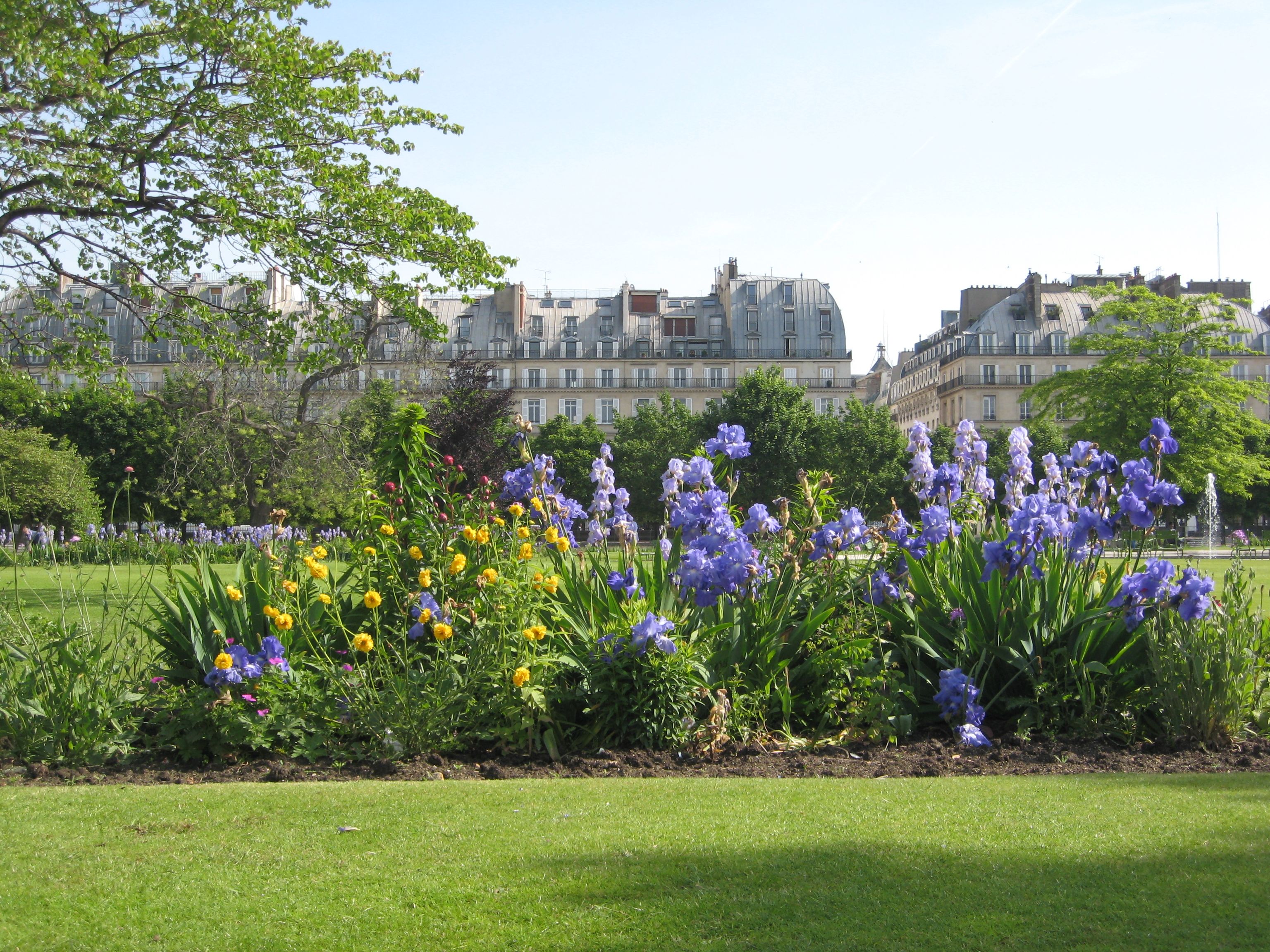
Tuileries Gardens

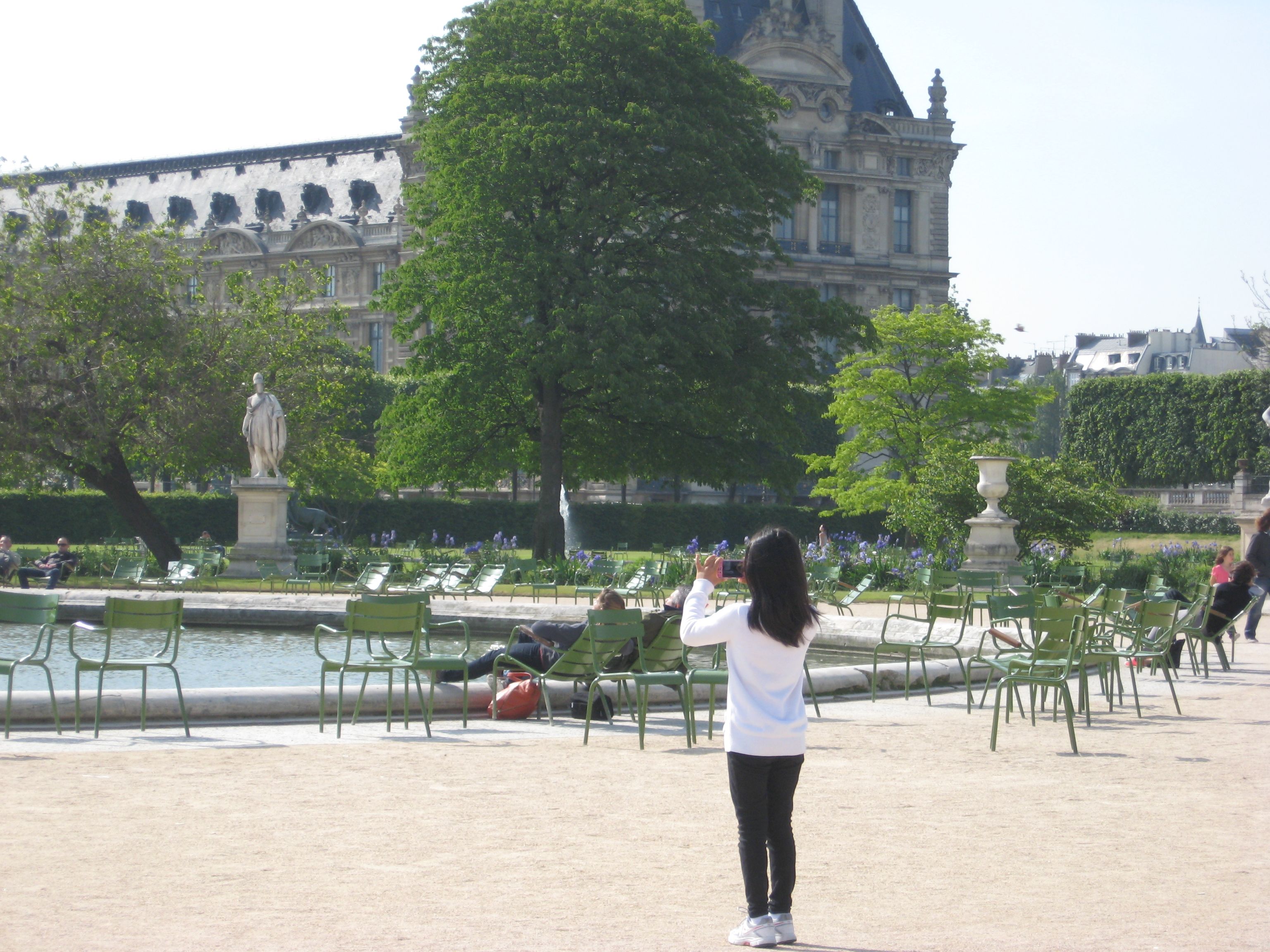
Tuileries Gardens, Paris

The Tuileries Gardens

Anyone whose been to Paris knows the Tuileries gardens bounded by Place Concorde and the Seine and right in front of the Louvre. The pebble paths under the lines of trees, the little green folding chairs, the kids, the dogs, the clusters of pensioners in berets, all define the Tuileries. Visitors today experience a refurbished Tuileries Gardens perhaps closer to the original version designed by Le Notre in 1680.

In 1992, the Tuileries were substantially remodeled. Recreating the botanical intentions of Le Notre was the work of Louis Benech and Pascal Cribier, commissioned by the Ministry of Culture to work with architect I. M. Pei.  Changes wrought by city life have altered Le Notre’s original grand vision anyway. The vanishing point in his elaborately detailed vista of the Tuileries became the Champs Elysees.

Information: http://en.parisinfo.com/paris-museum-monument/71304/Jardin-des-Tuileries

The Grand Garden Tradition

Ambling along tree shaded paths, gazing at swans trolling the reflecting pools, watching the fountains play, visitors relax into la bonne vie – the good life.  French national gardens are the ultimate example of exceptionally pleasing environments open to the public.
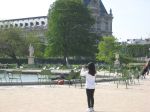
IMG_7631Le Notre specialized in formal gardens for wealthy chateau owners — dukes, counts and kings, not to mention the mansions and chateaus bestowed on mistresses and paramours of the nobles.

Then, as now, a formal garden expresses grandeur and tames nature in a perhaps misguided and usually futile attempt to demonstrate the power of human will over the natural elements. These 17th century men with money wanted fancy gardens to show off their power. Le Notre obliged them, but he was not a hired hand.  He insisted on following his own vision, incorporating wild spaces into the garden design and creating long vistas. His reliance on lengthened perspective is timeless and especially relevant today with our crowded urban spaces‹h‹ that offer limited viewpoints. Le Notre also figured open areas into his vast panoramas. These days, his graded grass terraces in the parks around Paris are dotted with sunbathers and the open spaces have become sports fields, but the new uses do not diminish Le Notre’s overall vision.
So, take a break from the shopping and sightseeing. Imitate the royalty of times past and stroll through Le Notre’s gardens along paths bordered by yews trimmed into tight inverted cones. Rest for a moment and admire the planted vistas created by Le Notre to draw a visitor’s eyes far into the horizon, the way an artist directs the viewer to a focal point in a painting. Amble in the shade of chestnut trees along the lanes of Versailles, St. Cloud, Seaux, and St. Germaine en Laye. These gardens of Le Notre are near Paris, accessible by Metro or RER, and best of all, admission is free.

Domaine Nationale de Saint Germaine en Laye
The main attraction in the Domaine Nationale de St. Germaine en Laye is the Grande Terrasse, which extends more than 2 kilometers towards Maisons Lafitte, a nearby chateau open to the public. La Terrasse de Le Notre, as it’s also called, is a weekend favorite for Parisians who stroll en famille. Elegant women of a certain age tow their little dogs on leashes. Young couples in the process of discovery hang arms around each other’s necks or share earbuds and digital music.

Solo men lean on the wall and smoke, watching the passing scene. The perambulators at La Terrasse have become more publican since Le Notre created the long walkway for the court of Louis XIV three hundred years ago. Carved out of a forest, the gardens of St. Germaine en Laye feature parterres bordered with beds of shrubs and flowers, circular pools, and broad paths that create diagonal walks from fountain to fountain. The adjacent forest beyond the gates of the formal gardens has extensive paths for aerobic walking.

Overlooking the Seine near the beginning of the Grande Terrasse is the Pavilion Henri IV restaurant. Culinary enthusiasts take note: Sauce Bernaise was created here in 1847 by the chef Collinet in honor of Henri IV who was from the Berne region.
An arch in the wall surrounding the gardens of St. Germaine-en-Laye marks the entrance to the restaurant courtyard. The 3 or 4 course luncheon menu is usually a good value.  Adjacent to the gardens is the Chateau of St. Germaine en Laye, home of the National Museum of Antiquities. King Louis XIV was born in the vast royal palace Chateau Saint-Germain-en-Laye.

Information: http://www.parcsetjardins.fr/ile_de_france/yvelines/domaine_national_de_saint_germain_en_laye-943.html

St. Germaine en Laye is 19 kms. west of Paris. The easiest way to get there is by RER line A, stop at St. Germaine.

Versailles

Think of Versailles and scenes of courtiers in the Hall of Mirrors or Marie Antoinette cavorting as a shepherdess come to mind. But Versailles is more than just an awesome palace. For some, the greatest beauty of Versailles is expressed in the gardens of LeNotre.

Le Notre’s immense dramatic experiment in taming nature, pruning and stretching the flora to fit his personal vision was an innovation for garden design. Other landscape designers have contributed to Versailles and fortunately for us, their collective vision was so comprehensive and grand that it discouraged modern tampering and the vistas have remained mostly intact.
If the lines of tourists waiting to tour the Chateau at Versailles are long, and they nearly always are, walk steadily past them, right through the arcade that marks the edge of the gardens. Inside the formal gardens, the flower beds, topiary yews and ankle-high hedges are resemble embroidery on the lawns. Those with more stamina and curiosity should push onward, down into the endless tree-bordered lanes, to the meadows, the canals and quasi-wild patches of woods that compose the grand Parc de Versailles.

Information: http://www.chateauversailles.fr/gardens-and-park-of-the-chateau-

Versailles is accessible by train on the RER C line with Paris – Versailles Rive Gauche zones 1-4  ticket.  (T+ ticket is not accepted on this route).

SNCF trains arrive at the Versailles Chantiers station leaving from Paris Montparnasse Station. SNCF trains arrive at Versailles Rive Droite Station leaving from  Paris Saint Lazare Station.

Seaux

Le Notre’s intimate masterwork, Seaux, is a cathedral of the outdoors. The long nave has its axis at the fountains. The hills stretch out as far as the eye can see because Le Notre’s restructuring of the land creates a foreshortening that fills the visual panorama. The eyes seem to accelerate as they scan the view. The gardens at Seaux are punctuated with tidy reference points — triangular tipped firs, blooming roses at the corners of the paths — that keep the roving eye engaged.
Much of Seaux has been remade; these are not the benches and stairs constructed in the 17th century. And where the high and mighty once amused themselves, couples with frisbees and dogs leap past sunbathers.

In the woods, a man and a woman are practicing martial moves with long poles, flipping the poles behind their heads around to the front and to the ground. Glimpsed through the alleys of trees their shadows play double and suggest Medieval jousters.

Information: http://domaine-de-sceaux.hauts-de-seine.net

Seaux is a station on the southbound RER line. The entrance is about a 10 minute walk from the station. Although Metro tickets are accepted into RER turnstiles, it is imperative that an RER ticket be used. Attempting to exit using a Metro ticket at an RER station invites a substantial fine. Its proximity to Paris makes Seaux a popular weekend destination.

Parc St. Cloud
From the heights of Parc de St. Cloud, one can see the landmarks of the Paris skyline: Sacre Coeur in Montmartre, the Eiffel Tower, Les Invalides, and the new office towers in La Defense. The park is built on a palisade on the banks of the Seine. Famous for Le Notre’s waterworks and cascades, St. Cloud attracts city dwellers in search of respite from summer heat.

Cars are permitted in part of the park which alters the feel of Le Notre’s self-contained garden universe. There are huge distances to traverse in the park, and cars make the outer reaches more accessible but vehicles are intrusive, especially if the radios are blaring. Seek instead the dark woodsy interiors, where one can look across tree lined alleys to open green spaces or stand on the expansive green lawns and look into the forest spaces. There are stands of perfectly aligned trees which create interesting geometric shadows.

Information: http://saint-cloud.monuments-nationaux.fr

To get there, take Bus 72 from the center of Paris and descend after the bridge over the Seine. Or, take the Metro to Porte St. Cloud station and walk across the bridge following signs to the pedestrian crossing to Parc St. Cloud. Opening and closing times vary depending on the month.

Fontainebleau.

The gardens encompass 130 hectares.  Visitors can explore the gardens on their own.  Activities such as horse-drawn carriage rides, jeu de paume (real tennis) games, Segway rides, boating and hot-air balloon trips are offered for a fee.  Those who also want to tour the chateau should plan an all-day visit.  

Of particular interest to followers of Andre LeNotre is the Grand Parterre, the largest formal garden in Europe. Le Nôtre created these gardens between 1660 and 1664 along with Louis Le Vau. It was Louis XIV’s great achievement at Fontainebleau. While some features such as the original box hedge work in the formal garden were lost under Louis XV, the layout of the herb gardens remains.  The water features elaborately complimented with statues are also intact, such as the Bassin des Cascades (17th and 19th centuries).

Information: http://www.musee-chateau-fontainebleau.fr/spip.php?lang=en

Vaux le Vicomte

If Vaux le Vicomte seems familiar, it is.  The quintessential French Chateau has been featured in many films and television shows, fashion and travel advertising spreads.

At Vaux le Vicomte, Le Notre stretched his vision. This was the first time gardens were planned with symmetry on the grand scale.  Standing on the stone steps behind the Chateau, we followed Le Notre’s cultivated gestures down the staged terracess to the traversal pool and up the hill to the vanishing point on the horizon a mile away.  By restructuring the grade, Le Notre expressed  an overall ordering and conquering of nature, the hallmark of his era.

Nicolas Fouquet, finance minister for Louis XIV, commissioned Le Notre and gave the budding landscape designer his head.Fouquet never got the chance to enjoy the estate; he was dismissed from his post, then  recalled.  Finished the gardens in 1661.

The trees are severely cut back to retain their shape.  Eighty years old in 1991, they have been replaced many times since Le Notre’s time. Cut to a triangular cone shape, the boxwood at the corners where paths intersect defines the squares of lawn. When viewed from a distance, the knobbed boxwood punctuating the estate looks like chess pieces in play on a board.  Intricate weave of low hedgery.

During the long walk back, a tour of the perimeter and cross paths is more than 2 miles, we speculated that the after dinner stroll kept the nobles lean. As you face the Chateau at the lower traversal pool where the swans parade, on the right there is a path tunneled through a strip of woods that ends at the chateau. To reach the path, go up the staircase at the extreme end of the pool to a cleared area on top with two rows of topped off trees constructed into an arbor that gives excellent shade in the summer. The path runs parallel to the formal gardens and through the branches one can observe people strolling in the gardens.    The opportunity to survey tamed nature from behind a veil of trees left intentionally wild is exactly the kind of romantic juxtaposition that amused Le Notre’s social contemporaries. Whether the nature path was part of Le Notre’s plan is not clear, but indeed he would have enjoyed the horticultural joke.

Privately owned, this is said to be the most attentively restored of Le Notre’s efforts.    Address 7 Chateau de Vaux le Vicomte, Maincy. Candlelit tours and other events are available. Tickets purchased online are reduced price.

Information: http://www.vaux-le-vicomte.com/en/preparer-votre-visite-en/visits-for-individuals

Open daily from 10 a.m. to 6 p.m. from 9th March until 11th November 2014.
On 29th and 30th November; On 6th, 7th, 13th and 14th December and from 20th December 2014 until the 4th January 2015. Closed on 25th December and 1st January.

Maintenon

The Chateau de Maintenon is 18 kms from Chartres. It was the private home of Madame de Maintenon, the second spouse of Louis XIV.  With the able guidance of  LeNotre, the park and gardens were designed by Louis XIV and Madame de Maintenon.  The garden is small so you can easily tour it without a guide.  Middle ages era structure was enlarged after Madame de Maintenon purchased it in 1675.   Schematic drawings of the unfinished aqueduct designed by Vauban to carry water from the Eure River to Versailles may be on display and finished pillars of the aqueduct dominate one end of the property.

Information: http://www.chateaudemaintenon.fr/en

Chateau de Maintenon, Place Aristide Briand, 28130 Maintenon, Eure et Loir.  Opening and closing times vary depending on the season and day of the week.

Le Grand Hotel :: Opera

Wednesday, August 8, 2012

Posted by L. Peat O'Neil in Artists in Paris, France Travel, Hotels in Paris, Paris, Restaurants in Paris, Writers in France

≈ Leave a comment

Tags

19th century, cafe-life, luxury, people-watching

Le Grand Hotel
2 rue Scribe
75442 Paris Cedex 09

  • Location: Overlooking Paris Opera
  • Suites: 72
  • Standard and Deluxe Rooms: 470
  • Originally built 1862.

Le Grand Hotel. Here’s where the beautiful and the powerful have been living and loving it up for a hundred and fifty years. With the Paris Opera as next door neighbor, and Cafe de la Paix as the hotel’s “coffee shoppe” you know Le Grand is the center of a certain special universe. You could say it’s a symbol of French luxury dating back to the opulent Second Empire of Eugenie and Napoleon III.

Look up at Le Grand! You can muse with the clouds through the structural marvel of the glass pyramid that covers the central court. Skillful design by the renovation team that included architect-designer Pierre Yves Rochon transformed the 19th century court where carriages dropped off guests decades ago into a lounge/restaurant atrium.  Interior detailing and furnishings hint the Second Empire, but it’s all retro chic modern.  One expects Cary Grant to amble down the staircase to the sassy heroine waiting for cocktails below.

The dining rooms include the  La Verriere winter garden atrium open for breakfast and lunch, “Le Bar” and world-famous Cafe de la Paix.

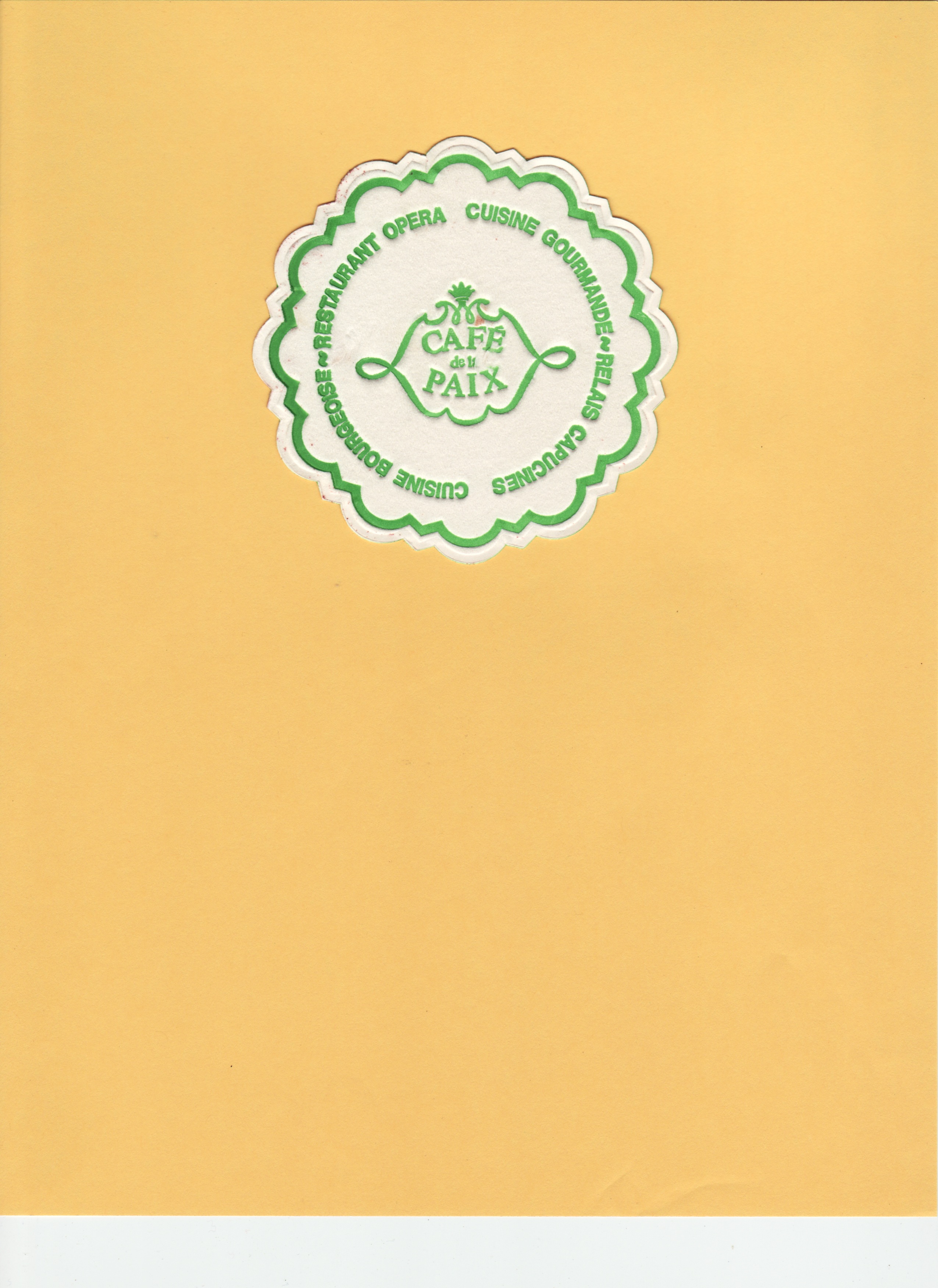
Vintage beverage coaster from
Cafe de la Paix.

Cafe de la Paix has had some famous chefs work their magic in its kitchen, including the great Escoffier. Today, the cafe terrace and the restaurant at the back are the places to see and be scene while you nibble, sip and giggle. Because it is so very well known around the world, you never know who will drop by the great meeting place.


The concierge staff are deft at fielding odd questions or fulfilling travelers’ whims. Maids, room servers, porters and doormen were courteous and quick to complete their tasks.  The staff are professionals and the staff-guest ratio is high. Le Grand’s Spa with fitness facilities offers fine care from aromatherapy to floatation.

Jean-Pierre Redouté :: Artist at Chateau Malmaison

Monday, July 23, 2012

Posted by L. Peat O'Neil in Artists in Paris, Artists Near Paris, France Travel, Gardens in France, Paris

≈ Leave a comment

Tags

botanical painting, Josephine Bonaparte

Chateau de Malmaison

For Joséphine de Beauharnais Bonaparte, the Chateau de Malmaison —  just outside Paris, with its abundant gardens and enveloping forests — was a cherished retreat, her respite from the demands of Paris and Napoleon’s court life. Today it is a delightful oasis and a museum dedicated to Joséphine and Napoleon.

The Chateau de Malmaison, or “bad house,” as it was called in the Middle Ages when the property was the site of a leper colony, is nestled in a small forest near the Parisian suburb Rueil-Malmaison. When Joséphine bought the house in 1799, it was the centerpiece of a 640-acre estate, which has shrunk to six hectares (14.8 acres). Today, residential apartment buildings sit on land that was once part of the empress’ great park.

The original Malmaison was built in 1622. After the imperial couple completed their renovations, the chateau incorporated elements of the neoclassical Empire style then flourishing. Malmaison is spare and compact, but the use of such details as wide window casements, decorative cornices and molding as well as neutral floor covering and mirrors gives the illusion of spaciousness.

Malmaison had several owners after Joséphine, including Napoleon III, who was Napoleon Bonaparte’s nephew and step-grandchild, the son of Josephine’s daughter Hortense de Beauharnais and Napoleon’s brother Louis. The  philanthropist Daniel Osiris bought the house and grounds in 1896, financed restoration and presented Malmaison to France to be used for a Napoleonic museum. Further acquisitions and careful preservation have enhanced the property.

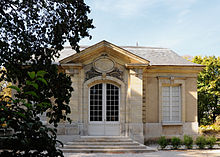
Osiris Pavillion

As one enters the grounds, the surprisingly compact white chateau comes into view, dwarfed by the surrounding woods. In summer the scent of the famous roses planted by the botanist and artist Jean-Pierre Redouté is a pleasant distraction along the gravel paths.


The tour begins with the salons, dining room and music room on the ground floor and proceeds at a leisurely pace. Braided satin cords bar traffic from certain precious carpets, but there is ample time to study the antique furniture and accessories.

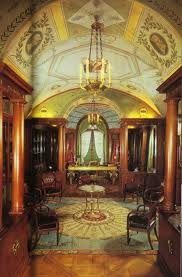
Library at Malmaison.

Napoleon’s war campaign office is re-created in one ground-floor room. Walls and ceiling are covered with striped cloth; crossed spears are set in the corners of this simulated tent. The general’s portable desk dominates the room and, indeed, Napoleon seems almost present as one stands in the midst of the belongings that he took with him to battle.


The music room reveals Josephine’s gentler touch. Delicate paintings of flowers by Redouté decorate the corridor leading to the ornate salon where the empress’ harp is displayed.

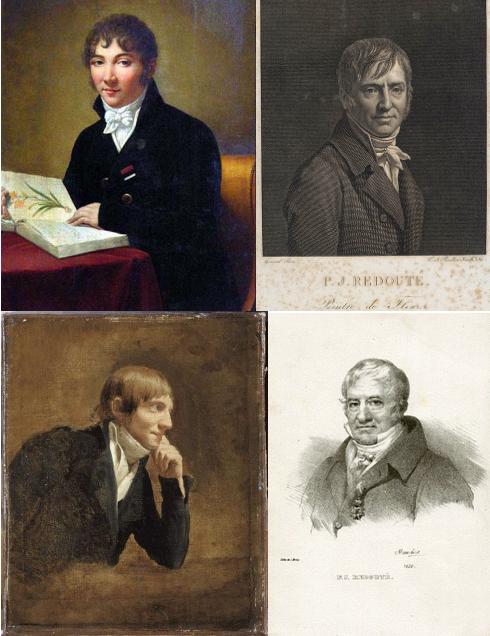
Four faces of P-J Redouté

An elaborate round table covered with signs of the zodiac and mystical symbols reveals another aspect of Josephine. The guide comments that she regularly had her own and Napoleon’s horoscopes cast and that tarot card readings by fortunetellers were routine entertainments in the household.

Lily painted by P-J Redouté

On the second and third floors, the tour continues along some very narrow passageways and into the family bedrooms and a room filled with memorabilia dating from Napoleon’s exile on St. Helena. The tour group buzzed with whispered comments when we came to the Osiris Pavilion on the second floor to view the death mask molded by the Corsican doctor Francesco Antommarchi who attended Napoleon as he died in 1821 on the remote South Atlantic Island, St. Helena. Also on view are the camp bed on which he died and the cover for the catafalque that carried his remains to the tomb.

Josèphine’s bed.

Some of Josephine’s wardrobe spills out of one of the bedroom closets. Cluttering bedside tables and dresser tops are personal souvenirs and toilette items belonging to Joséphine and Hortense, her daughter.

An avid patron of horticulture, Joséphine also left her mark on the gardens of Malmaison, which she employed Redoute’ to lay out. In early summer they are at their most colorful, when rows upon rows of roses are in bloom.

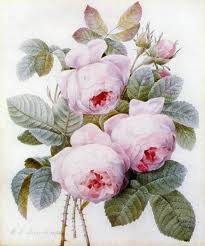
Rose by J-P Redouté

In addition to his horticultural creativity (he developed many new rose varieties for Joséphine), Redouté was one of the world’s greatest botanical illustrators. His meticulous paintings of the roses at Malmaison are among the treasures of the New York Public Library, and his rose varieties grace gardens all over the world.

A few steps from the chateau, in the former stables, is a display of coaches and carriages, including the one Josephine rode in on the return to Malmaison after her humiliating divorce from Napoleon in 1809. Equally poignant is the carriage used by Princess Marie Antoinette of Austria when she came to France to marry Louis XVI.

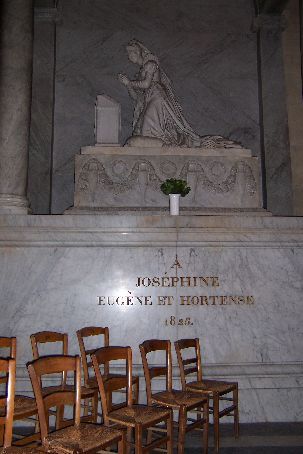
Josèphine’s Tomb

Joséphine lived at Malmaison until her death in 1814. Not far from the gardens she presided over, in the church in the center of Rueil-Malmaison, is her white marble tomb.  With her daughter Hortense, the two women, an empress and a queen, mother and daughter, repose together in the silent church, their vivid lives now history.


Address Book:

Chateau de Malmaison (Avenue du Chateau, Rueil-Malmaison, France). Consult the website for current opening hours, tours and virtual tours.

The museum is open daily, except Tuesdays.  It is closed December 25 and January 1.  The last entry each day is 45 minutes before closing time.  Closing times change depending on the season and are open slightly later on weekends.  Call ahead or check the museum website for specifics.

The chateau is about 12 miles (45 minutes) from Paris by car. Take Rte. N13 west from Neuilly and follow the signs to Rueil-Malmaison and the chateau where there is a free parking lot.

From la Défense metro/RER station: take bus 258 to “Le Chateau” (25 minutes).  Cross the Route Nationale 13 and walk to the chateau about 300 meters.

From Rueil-Malmaison station: take the RER A line  to Rueil-Malmaison, then the “Bus Optile 27” and get off at “Le Château” (8 minutes)

Nearby Attractions of Interest:

On Avenue de l’Imperatrice Josephine, a few minutes’ walk from Malmaison, the Napoleonic pilgrimage continues at Chateau de Bois-Préau, bequeathed to France by Edward Tuck, an American diplomat-banker with a passion for collecting portraits and artifacts of the Napoleonic era. Part of Tuck’s collection is housed in the Petit Palais in Paris.

In nearby St. Germain-en-Laye (also on Rte. N13) is the small Debussy museum, where the composer was born.

A similar version of this article appeared in The Washington Post.

Louise Colet: Rage and Fire

Saturday, July 14, 2012

Posted by L. Peat O'Neil in Artists Near Paris, France Travel, Hotels in Paris, Normandy, Paris, Provence, Writers in France, Writers in Italy

≈ Leave a comment

Tags

19th century, artist cafes, feminists, poets, writers

Rage and Fire: A Life of Louise Colet

Pioneer Feminist, Literary Star, Flaubert’s Muse.

Francine du Plessix Gray, Simon & Schuster,  1994.

Louise Colet
http://en.wikipedia.org/wiki/Louise_Colet

Who was Louise Colet?  Close friend, muse and lover of one of France’s greatest novelists — Gustave Flaubert.  But  long before she met Flaubert, she was a highly productive poet and essayist, a feminist dedicated to fighting for equal rights for women and honored by the Académie Française.  She is usually described in the context of her friendship with  Gustave Flaubert and billed as his muse.  Yet, it is important to remember that when the writers met, she was the celebrated one, a 36-year-old self-supporting poet honored by the Académie,  while he was an unpublished 24-year-old aspiring novelist who lived with his mother in the country.

Gustave Flaubert
http://fr.wikipedia.org/wiki

Louise Colet developed into a scathing political satirist, dedicated to supporting the mid – 19th century drive for liberty and justice.  Decades after the American and French Revolutions which certainly jolted the aristocratic land-owning class, representative governance and human legal equality were still a distant dream for most people.   The “trickle down” factors of economic equity, universal suffrage and political liberty  were  still being hammered out in North America and Europe.  The idea that human rights and political equality and legal independence applied to women was hardly a view shared by men of the era.  In this time period the people of many European countries pushed for democracy, labor and voting rights, legal equity and individual liberty.  And so were Americans seeking civil justice, an end to slavery, voting rights for women and poor people who were excluded from participating in elections.

To follow the footsteps of Louise Colet, go to Provence, to Mouriès, the village near Servanes.  The Hostellerie de Servanes is the ancestral estate where Louise Révoil grew up.  Born in Aix-en-Provence, east of Servanes, Louise’s maternal family were local gentry with generations serving in the Parliament of Provence.  Her father, from the merchant class, was head of the local postal system.  She learned quite naturally to align herself with the people’s causes and in strictly divided class-conscious Aix, Louise’s aristocrat mother  directed her family to walk on the side of the promenade for ordinary people rather than the elite side of the Cours Mirabeau, the “see and be scene” promenade in Aix, even though they were certainly entitled to walk with the local aristocracy.  The Fonds Louise Colet, her papers and other archival material from Louise Colet ‘s life and work,  is housed in the Médiathèque Ceccano section of the Bibliotheque Municipale d’Avignon.

The Musée Calvet in Avignon preserves Colet memorabilia, according to the acknowledgements in du Plessix Gray’s book, but I was not able to successfully search for items related  to Louise Colet using the search function on the museum website.  It’s likely material related to Louise Colet would be in a museum archive or library, rather than part of the collection on view digitally.

During her years in Paris, Colet lived in several different apartments,  as might be expected for a single mother supporting herself with free-lance writing and literary stipends from the government.  Louise Colet lived at 21 rue de Sèvres during the time she hosted her own literary salon, then very much in vogue.  This apartment was not far from  L’Abbaye aux Bois where Madame Récamier conducted her famous artistic and philosophical discussions until 1849.  Colet had a falling out with her friend over the usual miscommunications and misunderstandings. Colet also lived at 21 rue Neuve Fontaine Saint-Georges  (rue Fromentin).  It was in this lodging  in Montmartre where she decided to separate in 1842 after living briefly with her spouse, the musician Hippolyte Colet.

Louise Colet died March 8, 1876 in her daughter’s apartment, in the rue des Ecoles in Paris, although some books report that Colet died in a small hotel on that street.  During the previous summer in Paris, Colet’s letters of the period were written from the Hotel d’ Angleterre, Rue Jacob and the Hotel du Palais-Royal, Rue de Rivoli. Contrary to her wishes, she was buried with the Catholic Church’s ceremonial pomp that she despised, in daughter Henriette Colet Bissieu’s husband’s family plot in the municipal cemetery in Verneuil, Normandy.  The Bissieu family estate was named “Fryleuse” and is located in or near Verneuil. It is likely that  the town “Verneuil” refers to  Verneuil-sur-Avre which is in Normandy.

Beyond her writing, fired-up feminist rhetoric and long friendship with Gustave Flaubert, Louise Colet took on the Vatican and launched a public relations campaign on behalf of the mid-19th century freedom fighters Garibaldi and Cavour.

During her months in Italy, Louise Colet followed the footsteps of writers she admired, frequenting Caffe Florian in Piazza San Marco, Venice and searching for the exact rooms in the Hotel Nani (later, the Hotel Danieli) where writer George Sand and her lover Alfred Musset lived and worked decades earlier in 1833-1834.

But Colet’s main mission was to shine a light on the efforts of Cavour and Garibaldi to create a unified Italy.  Their efforts to unify the fiefdoms and city-states of the Italian peninsula challenged the temporal power of the Vatican. Papal States scattered throughout the peninsula we now call Italy were gradually being brought under the unifying rule of Victor Emanuel; democratic government would follow unification.  Colet  used her considerable literary fame to seek meetings with key members of the Vatican government.

Francine du Plessix Gray writes:

“In February of 1861, after visits to Sicily that inspired many more pages of art history, Louise Colet left Naples for Rome.  Victor Emmanuel had vastly diminished the Papal States the previous autumn when he occupied the Marches and Umbria, as Garibaldi had wished to do.  The papal territory was reduced to the city of Rome, where the entrenched conservative factions had grown more bitter.  The city was rife with secret police that kept watch on antipapist elements; one of its targets, in the first months of 1861, was Louise Colet.  As soon as she had settled at the Hôtel Inghilterra – a lovely hostelry still standing today on the Via Bocca del Leone, two blocks from the Spanish Steps – she was warned by one of her compatriots, a bookstore owner, that she was under police surveillance.

The warning left her undaunted  She was determined to remain in Rome = whose antiquities thrilled her as its religious artifacts horrified her = to continue her campaign against the Catholic clergy, which she considered to be the principal enemy of human progress.

Louise’s anticlericalism was fanned by a pope who was one of the more repressive Catholic leaders of the post-Reformation era and whose pontificate was the longest in the history of the papacy  (1846 – 1878).  Although he had begun as a fairly liberal reformist, Pius IX became an arch conservative in the 1850s, when Cavour attempted to limit his temporal power.  He militantly opposed every goal of the Risorgimento, and his reign was defined by two of the most regressive encyclicals of papal history, those that set forth the dogma of the Immaculate Conception and the doctrine of Papal Infallibility.

When she arrived in Rome, Louise immediately set off to visit the Vatican, where she assisted at a Mass officiated by Pius IX in the Sistine Chapel.  She describes the obese little Pope, his thick head doddering over a swollen neck, his muddy eyes and weak lips, his blotched red face and powdered hair, the archaic pomp with which his chair is carried into the church by fourteen papal guards.  She considered the basilica of Saint Peter a site “of glacial pomp … totally devoid of any mysticism or mystery.”  With the exception of the Pietà of Michelangelo, who “would have been a far greater artist if he had fawned less upon illiterate pontiffs,” the basilica’s “overabundance of riches” was a “a monument to hypocrisy … catering to the taste of parvenus and bankers.”

Louise was particularly disgusted with the opulent tomb of Queen Christina of Sweden – “a ruler more pagan in her mores than those of pre-Christian times” – whose recently published letters had revealed her to be “a thief, a violent, insolent and debauched strumpet.”  In the middle of Saint Peter’s, Louise shouted, “I protest this sanctification of Christina of Sweden!  As a saint,as one of the truly just, I far prefer Garibaldi!”  Her outburst terrified a priest, who took to his heels and rushed back into the depths of the basilica.

Later that month, she wrote a burlesque of a Holy Week Mass at Saint Peter’s, which re-created the Last Supper:  The Holy Father himself served food to the thirteen beggars who were seated at the table as stand-ins for Christ and his apostles.  At the end of the liturgy, a few seconds after the Pope had left the church, a group of fat monks rushed to the altar, chased out the beggars, and stuffed the food and wine into large baskets for their own use (Louise’s description of Rome’s decadent religious mores occasionally strain the imagination).

Visiting the church of Santa Maria Maggiore, Louise was prompted to make her own profession of faith, in which she revels a nonsectarian piety.  She was, in fact, a Diest:  She believed in a Supreme Being but maintained that the truths of this “Implacable Unknown” could not be incarnated in any temporal sect or power.  Her credo was a blend of the ideologies that had influenced her since youth – her maternal grandfather’s Voltarian skepticism, Victor Cousin’s eclectic mysticism, Alfred de Vigny’s Stoicism, Victor Hugo’s catchall pantheism.

“Although I long ago left the Catholic faith [she wrote in the fourth and final volume of L’Italie des Italiens’, I enjoy meditating whenever I can in a great empty basilica.  I do not feel as much communion with  infinity there as I do when gazing on a beautiful starry night or the immensity of the ocean; but I cannot enter into one of these temples which a succession of religious sects erected to their gods without feeling a sorrowful compassion concerning our finitude.

… In our time the human soul is stifled by Catholicism, an antihuman doctrine whose architects suppressed all air and light … Liberty, Justice, Charity, Science, and Chastity have been no more than ringing words in the mouthpiece of the Church. … and  at this very hour, the forces of liberty and justice shout out against the Church through all the voices of the Italian fatherland: “Why do you deny our liberation?” ”

These are the opinions with which Louise assaulted Cardinal Antonelli, Prime Minister of the Papal States, one of the Church’s highest-ranking prelates, when she cornered him at the Vatican in an attempt to obtain an audience with the Pope.  It was a few days before her return to France, and Louise had a grand purpose in desiring to talk with the Holy Father.  She wished to convert Pius IX to the cause of Italian liberation, to the side of Garibaldi and Cavour!

Sitting so close to her that his frock touched her dress, the cardinal, who wore immense rings of square-cut emeralds, addressed Louise as “cara mia” and heard her out but was not in the least swayed.  “The Church,” he told her, “cannot recognize the people’s novel claim to emancipation, which of course is no more than the right to rape and murder.  The meaningless concepts of ‘patriotism,’ ‘liberty,’ or ‘universal suffrage’ can only be brought about by violence.”  Nor did the prelate rush to get Louise an audience with Pius.  She had given him three days to arrange the meeting, and the cardinal explained that the Holy Father did not accept ultimatums.  Thus were we deprived of a colorful episode – Louise Colet preaching revolution to the most reactionary Pope of modern times.

Louise left Rome for Paris in the spring of 1861, after a year and eight months in Italy.  She would soon grieve over Camillo Cavour, who died suddenly, at fifty-one, a few weeks after she returned to France.  But the revolutionary goals Cavour pursued had been fulfilled.  All of the Italian peninsula, with the exclusion of Rome, had voted to be annexed to Victor Emmanuel’s kingdom.  In March, at a parliamentary session in Turin, Victor Emmanuel II proclaimed the birth of a united kingdom of Italy.  …

The venom in Louise’s pen, and the biting social satire that Flaubert considered to be her greatest literary talent, increased in her later years.  “Please accept the assurance of my most perfect disdain,” she signed letters to some of her antagonists.

Source:  Gray, Francine du Plessix. (1994) Rage & Fire : A Life of Louise Colet.  New York: Simon & Schuster, pp 307-310.

Flirting in the Literary Cafes of Paris

Friday, June 15, 2012

Posted by L. Peat O'Neil in Artists in Paris, France Travel, Paris, Restaurants in Paris

≈ Leave a comment

Tags

artist cafes, beatniks, bohemia, design, people-watching, philosophy, walk in Paris, writers

The Literary Cafes of Paris Welcome You!

Once upon a nineteenth century, the urban cafe was the place to be. Business, love, the business of love, and affairs of commerce took place in cafes, in full view of the world,  steps from the street.  Many of the cafes are enclosed now with a sound-proof glass between the cafe sitter and the exhaust fumes and passers-by. But inside, with a strong dose of imagination and a sense of history, the Parisian literary cafe mood stews the same scene.

You can sit where the greats once sipped, but to find where tomorrow’s ecrivans are penning, you have to plunge deep into la vie Boheme. Sometimes you’ll find a grimey smoke filled cafe just around the corner from the preserved banquettes that held the shanks of Fitzgerald, Miller, Nin, Flanner, Liebling or Sartre. Sometimes you’ll see a tweedy type with Hemingway’s bulk is still there, as I saw upstairs at Cafe de Flore, editing galley proofs with a fountain pen and sipping whiskey.

Interior of Le Train Bleu Restaurant
at Gare de Lyon.

During the cocktail hour at Le Train Bleu a gloriously guilt-free gilded expanse in the Gare de Lyon (20 Blvd Diderot),  people pose for each other killing time before a train departs, while covertly eyeing who is coming and going. A Japanese man dressed in a cape and suede boots converses intensely with a companion, a trio of German women dieted to fit their thigh-hugging cigarette pants tea and compare the day’s shopping victories. A Marlboro man in leather studies stocks or sports on an iPad.

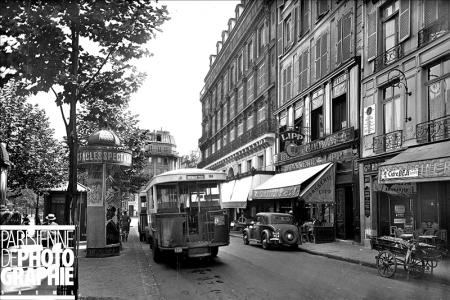
Brasserie Lipp 1930s

Across town on the Left Bank, the neon and colored tubular glass signs of Brasserie Lipp advertise with jittery color. Just opposite Lipp is the Cafe de Flor, a good place to watch the passing scene sitting behind the broad glass windows.

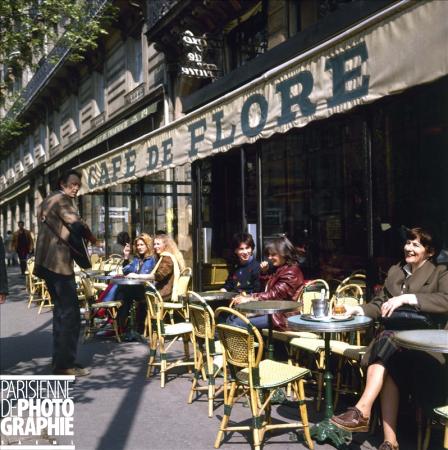
Upstairs at Cafe Flore, away from the cafe society, a writer in tweeds sits alone and

Cafe de Flore

makes notations on book galleys with a fountain pen. He’s a throwback to the time when political writers crafted manifestos and experimental litterateurs scribbled their thoughts. To the time when Picasso doodled on matchbooks and Sartre confided his quest for a new lover to the understanding ear of Simone de Beauvoir. Cafe Flore’s menu includes sandwiches, snacks, omelettes and salads, some breakfast items, pastries and ice cream, and of course a variety of beverages, from cafe creme to a bottle of Dom Perignon.

Down at Harry’s New York Bar, sank rue Daw-Noo, (5 rue Daunou) it dosen’t take too long a leap of imagination to transform the hunched hacks at the bar into latterday Hemingways, Janet Flanners or Ben Bradlees — journalists and editors serving time in the trenches of Paris.  Pity them not.

Harry’s Bar has been a hangout for Americans in Paris for nearly a century, a place where they could feel at home, stop for a moment and toss back a bourbon or a brew.

I got there around three in the afternoon, after lunch, before the commuter crowd. Inside the curtain that screens the street, a shade of gold suffuses the room, the gold of money and wood aged by many seasons of cigarette smoke and whiskey breath. Harry’s is a bar where men can be men and women can hunt them. A long legged habitue scans the want ads in the Herald Tribune.  She could read it digitally, but where’s the atmosphere and fun in that?

At the opposite end of the limites of the downtown core is picture-perfect Place des Vosges. Said to be the oldest square in Paris, it has been restored and claimed by upscale designers. The wind is cut by the well proportioned houses that line the sides of the square. A secondary line of tended trees muffles noise froum outside the compound. Inside the square the visual range spells sophisticated life, and the calm is all encompassing.

Dozens of famous and extraordinary people have lived here. Madame de Sevigne, a writer and literary figure, was born in one house on the square. The houses on the square perimeter were residences of famous moneyed Parisians of the last century.  Victor Hugo’s house is diagonally across from Ma Bourgogne restaurant where steak and fries are menu staples.  Open every day from 8 in the morning to 1 a.m. the next morning, this is a restaurant that aims to please local sensibilities and visitors from around the planet. By 2 p.m. on a Sunday, French couples are already into their second luncheon course. Writers and students sit outside nursing a pot of tea and reading in the pale winter light reflected in the bleached red brick.

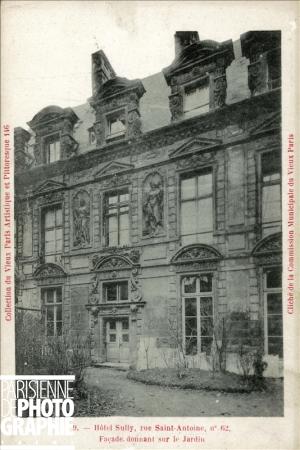
Hotel Sully
1901

Hotel Sully, a grand historic mansion, anchors one corner of Place de Vogues. Vaulted passages around the square shelter galleries, offices and ateliers of famous designers.

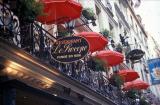
Le Procope Restaurant

The oldest surviving and active cafe in Paris is Le Procope (13 rue de l’Ancienne-Comédie).  The tracks of time and re-decoration may have made the restaurant-cafe more polished and slick than when Benjamin Franklin hung out there with his liberty-loving friends.

The cafe is still a place to pause and contemplate the world gone by, to write about it or just stare at the passing scene. People also pass time sitting in cafes to be seen, to feel part of the background life of a city, no longer a tourist or visitor.  The ticket for a seat at the edge of the world’s stage with a front row view costs only the price of a decently pulled espresso.

Address Book:

Le Train Bleu, inside Gare de Lyon, 20 Blvd. Diderot, Metro: Gare de Lyon.

Harry’s New York Bar, 5 rue Daunou, Metro: Opera.

Ma Bourgogne, 19 Place des Vosges, Metro: St. Paul.

Cafe de Flore, 172 Blvd. St. Germain, Metro: St. Germain-des-Pres.

Brasserie Lipp, 151 Blvd. St. Germain, Metro: St.Germain-des-Pres.

Le Procope, 13 rue de l’Ancienne-Comedie,  Metro: Odeon.

Literary Cafes :: Cafe de la Paix

Thursday, May 31, 2012

Posted by L. Peat O'Neil in France Travel, Paris, Restaurants in Paris

≈ Leave a comment

Tags

artist cafes, walk in Paris, writers

Cafe de la Paix, 5 Place de l’Opera.

Metro: Opera

Cafe de la Paix Coaster.

Well dressed, well preserved matrons meet each other for tea at tables facing the Paris Opera. Suave men of a certain age hide behind Le Monde or their iPads and eye the mirrored reflections of the sleek young genderless. The afternoon crowd at Cafe de la Paix is so discreet as it checks out who is sipping and sitting with or without whom.

If Booth Tarkington or Henry James edged through the palm trees, faux marble tables and rattan chairs today, hardly anyone would notice. Today, just as during the Belle Epoque a hundred years ago, the clientele is successful and civilized. But the beauty of a Paris cafe is that even shaggy-haired artistes can feel comfortable, as long as they can afford something from the menu.

The decore is muted gilt with pairs of cherubs at the corners so it looks like a Baroque church. And Cafe de la Paix is, in a way, an elegant temple to the gentele ways of time standing, or sitting, still. Near the staircase that leads to the W.C., there was once a small desk where a rubber stamp of the Cafe’s logo could be used to decorate postcards or a travel notebook. Tea and a waistline challenging pastry probably cost more than a sandwich and a beer. Service is included.

Footsteps of the Artists :: Auvers-sur-Oise

Wednesday, May 30, 2012

Posted by L. Peat O'Neil in Artists Near Paris, Artists' Graves, France Travel, Paris

≈ 1 Comment

Tags

art history, art studios in Paris, artist cafes, driving tours, Vincent Van Gogh

Auvers-sur-Oise and region.


Auvers, a village north west of Paris on the Oise River, attracted numerous artists during the latter part of the 19th c.  The town is probably most famous as the site for Vincent Van Gogh’s final burst of creativity and death.

Vincent Van Gogh wasn’t the only painter who lived and worked in Auvers.  Situated just 30 kms.  from Paris, Auvers offered exceptional diversity of scenes, light and atmosphere.  What a surprise of real countryside with light playing on the fields and water, fog and movement on the river, thatch roof cottages, stone houses, fields, animals, and rutted roads.In 1849 the railroad came, making Auvers less than 1 hour travel time from Gare du Nord.  Sundays brought the great exodus — artists and writers scrammed out of town.  Plenty of other folks did too.

Paintings by artists who lived and worked in Auvers hang in museum collections around the world, from the Metropolitan in NYC and the Musee d’Orsay in Paris, to  Musee de la Chartreuse, Musee de Pontoise, the Basel Museum and National Gallery of Prague.  Paintings created in Auvers are also featured in private collections.

The influx of artists might have started during the summer of 1854 when Corot and Daubigny painted together at Auvers. Dabigny bought land there in 1860.

In 1873 Paul Cezanne and Hortense, his companion, moved into a house close to Dr. Gachet’s in Auvers.  Cezanne continue to live and work there in 1874.  A decade earlier, Daubigny had helped Pissarro enter the Salon of 1864.  His children Karl and Cecile were friends of the painters and became painters themselves.  Berthe Morisot admitted to the Salon the same year with “An Old Road at Auvers.”

Daubigny continued to help artists promote their work.  He championed Renoir who was denied admission to the Salon in 1866 and  Pissarro (denied in 1867), as well as other painters.  Monet, Pissaro and Daubigny were refuges together in London during the Franco-Prussian War of 1870-71.  They were in contact with Durand Ruel Gallery who sold works by Corot and Daubigny.

Pissarro lived in Pontoise and was considered a God-father to Gaugin and Cezanne. The three artists are buried at Pere Lachaise Cemetery in Paris:  J-B Corot in 1875, Daubigny in 1876 and Daumier in 1879.

April 1887 marked the first impressionist group show in Paris. Pissaro organized (along with Monet, Degas, Guillaumin, Morisot, Sisley and others) the “Society Anonyme des Artistes, Peintres, Sculpteurs, Graveurs” for seven impressionist shows held during a span of 12 years.

Other Auvers painters whose names are not so current in the popular mind include: Charles Beauverie, Octave Linet lived in Eragny and painted in Auvers. Giran Max.

Van Gogh arrived in Auvers-sur-Oise on May 21, 1890 and worked with fury:  70 days and 70 paintings. Treasuring the self-portrait he’d one in St. Remy where he rested in a hospital, Van Gogh brought the portrait to Auvers and kept in his room at Auberge Ravoux.  Visitors can see Van Gogh’s garret and the Auberge serves perhaps the best lunch in town.
Wander around the town on foot to appreciate the intimacy of the neighborhood.  Stand in the same spots where Van Gogh studied the landscape and whipped paintings out of his soul Auvers.  Trek up to the church to pay homage at the small cemetery and leave a pebble on a tombstone.
A Japanese design influence on Van Gogh’s technique is suggested in the paintings of Dr. Gachet’s house.   Daubigny’s Garden, one of three versions of this garden painted by Van Gogh, hangs in the Van Gogh Museum in Amsterdam.

He wrote to his brother:  “There are many private homes and modern, middle-class dwellings which are very pleasant, sunny and filled with flowers. And this in a countryside that is almost plump.  Right at present the development of a new society amidst the old is not at all disagreeable.  There’s quite an aura of well-being.  Calm, just like at Puvis de Chavannes…no factories, only beautiful greenery, abundant and well-kept.” Letter to Theo and Jo, his brother and sister in law, late May, 1890.

The big change for Van Gogh was painting in open air.  Painting ordinary nature not idealized classically composed scenes.  He painted peasants doing vernacular chores.  The paintings described a moment of light with a  balance of mass and movement.

Van Gogh discovered emotion in human faces, cut through pretense to feeling.  He reveled in color and defined brushstrokes.

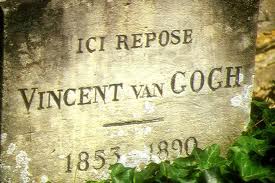
Vincent Van Gogh never left Auvers-sr-Oise.  He is buried alongside his brother Theo in the Auvers churchyard, a short walk from town.

Vincent Van Gogh’s tombstone.

Reference:

Auvers or The Painter’s Eye

Maire-Paule Defossez

Translated: Patricia Wallace Costa

Paris: Editions der Valhermeil, 1986.

← Older posts

Archives

  • September 2023
  • July 2019
  • May 2017
  • February 2014
  • January 2014
  • July 2013
  • February 2013
  • January 2013
  • December 2012
  • November 2012
  • October 2012
  • September 2012
  • August 2012
  • July 2012
  • June 2012
  • May 2012

Categories

  • American Artists in France
  • Artist's Studios
  • Artists in London
  • Artists in Paris
  • Artists Near Paris
  • Artists' Graves
  • Bookstores
  • Catalonia
  • Cathars
  • Feminist Leaders
  • France Travel
  • Gardens in France
  • Hotels in Paris
  • Languedoc
  • Musicians in Paris
  • Nightclubs and bars in Paris
  • Normandy
  • Paris
  • Provence
  • Restaurants in Paris
  • Shopping in Paris
  • Study Art in France
  • Women in Paris
  • Writers in France
  • Writers in Italy

Meta

  • Create account
  • Log in
  • Entries feed
  • Comments feed
  • WordPress.com

  • L. Peat O'Neil

19th c. 19th century 20th c. Alice B. Toklas Americans in Paris Antoinette Foque art Art Galleries Paris art history artist cafes art studios in Paris beatniks bohemia botanical painting cafe-life Casals Cassatt castles chateau Collioure Céret Dalí Debussy Degas design driving tours Dufy Editions des Femmes education Feminist publishers feminists gardens Gertrude Stein Gris Hemingway heretics history impressionists Josephine Bonaparte Kisling Le Notre luxury Matisse Montparnasse museum music painting people-watching philosophy photography Picasso poets Prades religious war Renoir Sarah Stein sculpture Sitges Toulouse-Lautrec Utrillo Valadon Vincent Van Gogh walk in Paris Women's Bookstores Women in Paris writers Yves Klein

Enter your email address to follow this blog and receive notifications of new posts by email.

Blog at WordPress.com.

Privacy & Cookies: This site uses cookies. By continuing to use this website, you agree to their use.
To find out more, including how to control cookies, see here: Cookie Policy
  • Subscribe Subscribed
    • Footsteps of the Artists
    • Already have a WordPress.com account? Log in now.
    • Footsteps of the Artists
    • Subscribe Subscribed
    • Sign up
    • Log in
    • Report this content
    • View site in Reader
    • Manage subscriptions
    • Collapse this bar
 

Loading Comments...